

 Photo: Roberta Sorge / Unsplash
The idea goes something like this: on keto you need not watch how much you eat, because with carbs low and insulin down the fat burns off whatever you put on your plate. Two studies led by Kevin Hall, a researcher at the US National Institutes of Health, put that to about the strictest test possible, with volunteers living on a hospital ward and every bite they ate weighed.
Contents
On the same calories
In 2016, 17 men with overweight or obesity spent four weeks on a high-carbohydrate diet and another four on keto, with the same calories and the same protein. On keto their bodies burned 57 more calories a day in the metabolic chamber (151 by a second method), an increase the researchers themselves called small and close to the limit of what the equipment can pick up. Fat loss, rather than speeding up, slowed down.
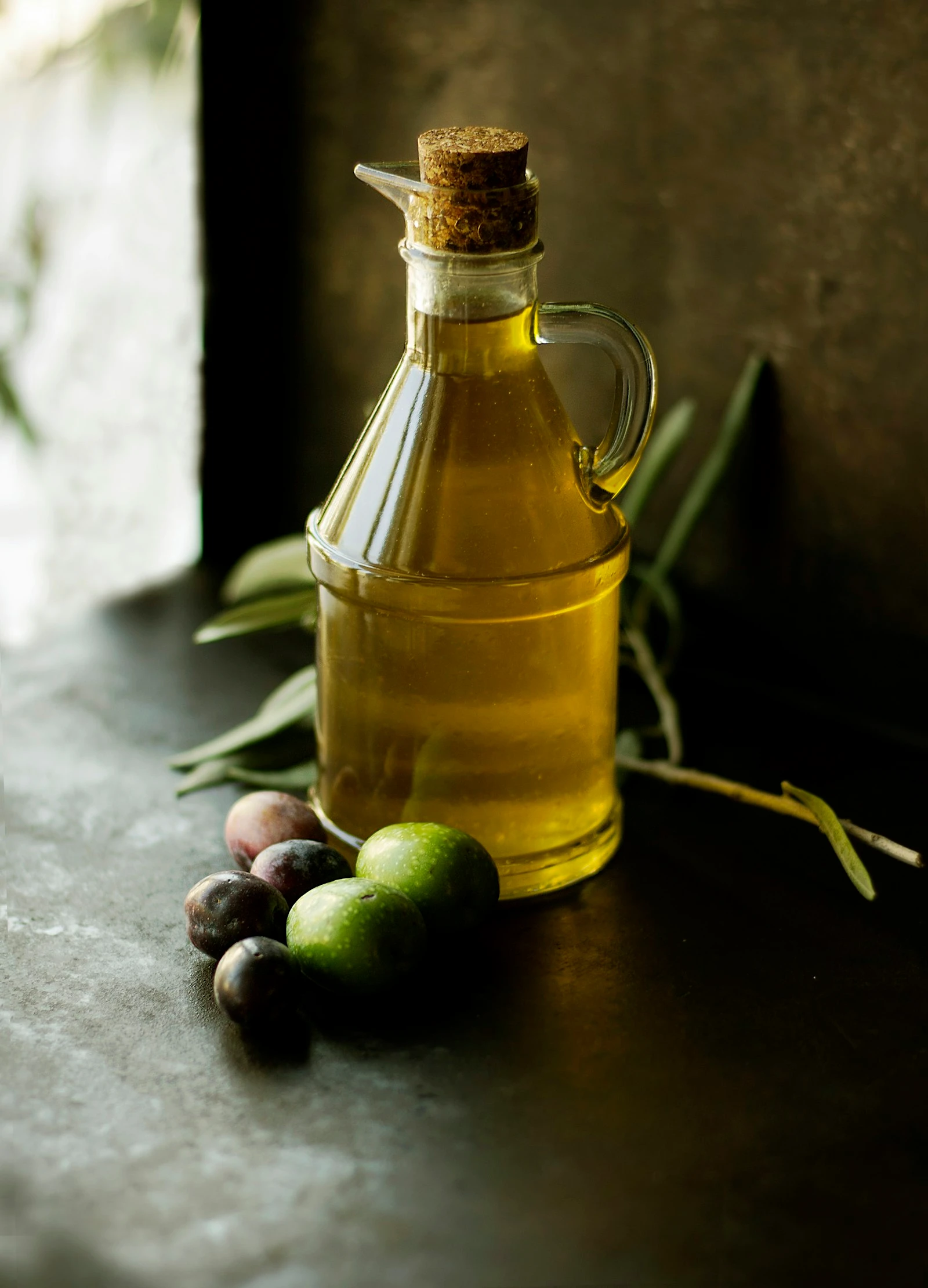
For a sense of scale, 57 calories is about 6.5 g of olive oil, a little over half a tablespoon.
When you eat as much as you want
In 2021, 20 adults spent four weeks at the NIH Clinical Center. For two of those weeks they ate keto at 76% fat and for the other two a plant-based diet at 10% fat, eating as much as they liked each time. On the low-fat diet they took in 689 fewer calories a day than on keto, the equivalent of 78 g of olive oil.
The study has its limits, of course: each diet lasted only two weeks and the food was minimally processed throughout. Still, it showed clearly that keto does not curb appetite on its own; you can eat a great many calories without noticing.
Keto does help you lose weight
A 2013 meta-analysis pooled 13 trials lasting a year or longer, 1,415 people in all: those on keto lost on average 0.91 kg more than those on a low-fat, calorie-counted diet.
That is a small difference. On keto, as on any other diet, your weight drops when the energy you take in is less than the energy you use.
Where the calories hide
The foods you eat most freely on keto are also the richest in calories. The figures come from the food database:
Food | Amount | Calories |
|---|---|---|
30 g | 207 | |
Bacon, raw | 50 g | 197 |
30 g | 196 | |
30 g | 188 | |
50 g | 170 | |
40 g | 161 | |
half, 70 g | 112 | |
Olive oil | 10 g | 88 |
10 g | 72 |
A handful of walnuts at your desk, an extra 10 g of oil on the salad and 40 g of cheddar in the omelette come to roughly 450 calories between them, while the day's carbs hardly move.
There is no need to count every calorie. If your weight has stopped coming down, though, look first at the oil, the nuts and the cheese; the Macro calculator will tell you how much energy you need.
Sources
- Hall et al., American Journal of Clinical Nutrition 2016: Energy expenditure and body composition changes after an isocaloric ketogenic diet in overweight and obese men — 17 men, 4 weeks of high-carbohydrate diet and 4 of keto on equal calories; +57 kcal a day in the chamber (+151 by doubly labelled water); fat loss slowed.
- Hall et al., Nature Medicine 2021: Effect of a plant-based, low-fat diet versus an animal-based, ketogenic diet on ad libitum energy intake — 20 adults, 2 + 2 weeks at the NIH Clinical Center; 689 fewer kcal a day on the low-fat diet than on keto.
- Bueno et al., British Journal of Nutrition 2013: Very-low-carbohydrate ketogenic diet v. low-fat diet for long-term weight loss: a meta-analysis of randomised controlled trials — 13 trials of at least 12 months, 1,415 people; 0.91 kg more weight lost on keto.
- Ola Keto food database — calories of the foods and the olive-oil equivalents (884 kcal per 100 g).
About the author
The Ola Keto team
Texts signed “The Ola Keto team” are written and edited by the people who build the site.
Comments
Comments are members’ personal views and experiences and are not medical advice. Do not change medication or treatment without your doctor.
To comment, sign in or create an account.
No comments yet. Write the first one.